

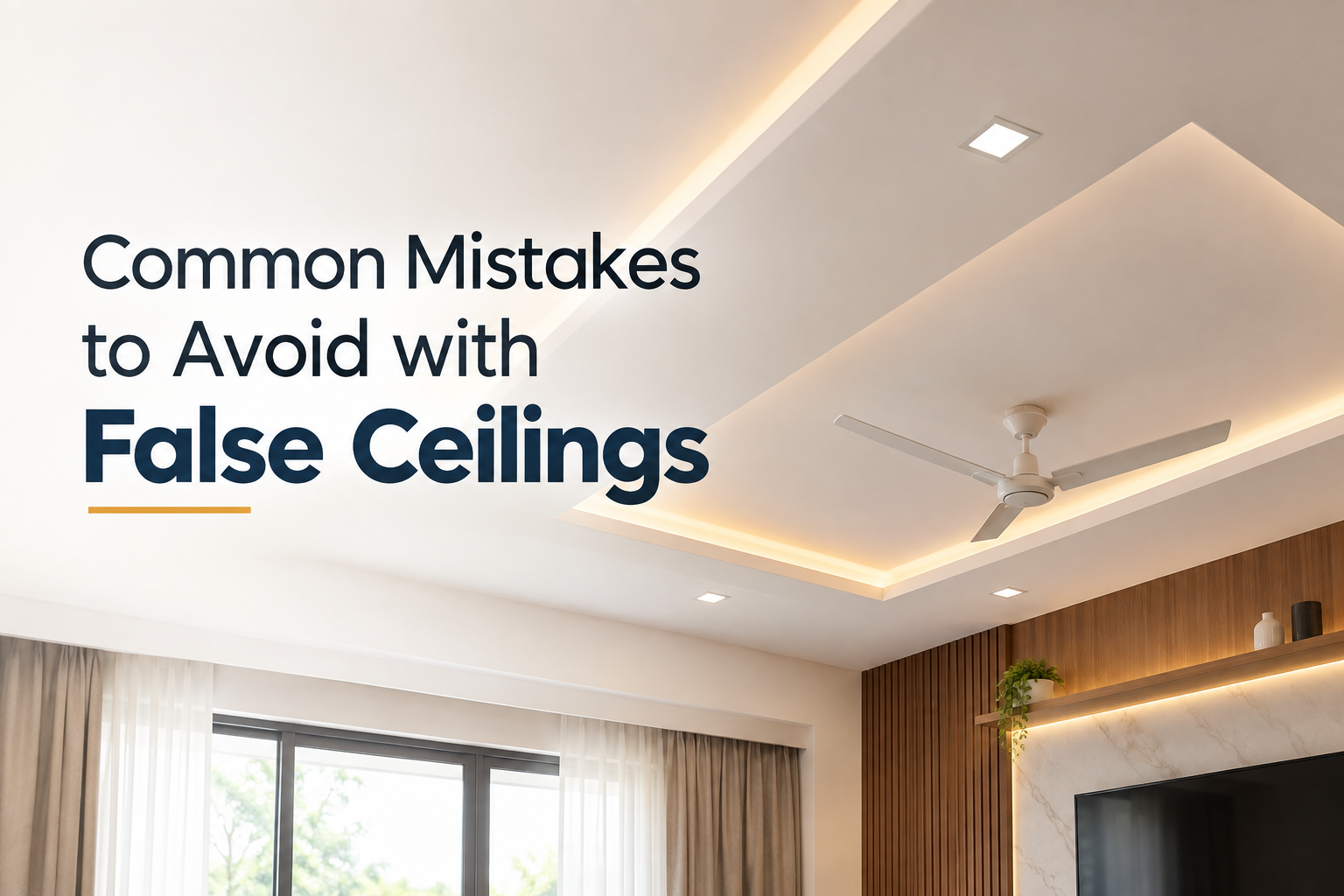
Common Mistakes to Avoid with False Ceilings
A false ceiling can completely transform the look of a room. It can make the space feel more modern, improve lighting, hide electrical wiring, and create a clean and elegant finish. However, choosing the wrong design, material, or installation method can lead to unnecessary expenses and maintenance issues.
If you are planning to install a false ceiling for your home, office, or commercial space, here are some common mistakes to avoid with false ceilings.
1. Choosing Design Only Based on Appearance
One of the most common mistakes is selecting a false ceiling design simply because it looks attractive in pictures.
A design that looks good in a large room may not suit a smaller space. The ceiling design should match the room size, height, lighting requirements, furniture, and overall interior style.
Tip: Choose a design that balances appearance with functionality.
2. Ignoring the Room Height
False ceilings reduce the original ceiling height to some extent. Installing a heavily layered or bulky design in a room with limited height can make the space feel smaller.
Before installation, check the available ceiling height and select a suitable design.
For rooms with lower ceilings, simple and minimal false ceiling designs are often a better choice.
3. Selecting the Wrong False Ceiling Material
Different spaces may require different materials. Choosing a material without considering moisture, temperature, usage, and maintenance can create problems later.
Common false ceiling materials include:
- Gypsum board
- POP
- PVC
- Metal
- Mineral fibre
Each material has its own advantages and applications. The right choice depends on where and how the ceiling will be used.
4. Not Planning the Lighting Properly
Lighting and false ceiling design should be planned together.
Installing lights without proper planning can result in:
- Uneven lighting
- Dark areas
- Excessive glare
- Unnecessary wiring changes
- Poor overall appearance
Plan the positions of spotlights, LED strips, fans, and other fixtures before starting the false ceiling installation.
5. Overloading the Ceiling with Too Many Elements
Adding too many layers, curves, lights, and decorative elements can make a ceiling look crowded.
A modern false ceiling does not always need a complicated design. A simple design with well-planned lighting can create a more premium appearance.
Remember: Good ceiling design is about balance, not adding more elements.
6. Ignoring Electrical and Maintenance Access
Electrical wiring, junction boxes, AC-related components, and other services may be placed above the false ceiling.
If proper access points are not planned, future maintenance can become difficult.
Always discuss maintenance access with the false ceiling contractor before installation.
7. Choosing a Contractor Based Only on Price
The lowest quotation may not always be the best option.
Poor-quality materials or improper installation can result in cracks, uneven surfaces, sagging, and frequent repairs.
When choosing a false ceiling contractor, consider:
- Material quality
- Installation experience
- Previous projects
- Workmanship
- Warranty or service support
- Overall project cost
8. Not Considering Moisture and Humidity
Moisture can damage certain false ceiling materials. This is especially important in areas such as kitchens, bathrooms, and spaces with high humidity.
The material should be selected according to the environment where it will be installed.
Proper ventilation and suitable moisture-resistant materials can help improve the ceiling's durability.
9. Forgetting About Future Changes
Interior requirements can change over time. You may want to add new lights, install a different fan, modify electrical wiring, or make other changes.
A false ceiling design that leaves no room for future modifications can make such work more complicated and expensive.
Planning for future maintenance and modifications can save both time and money.
10. Skipping Professional Planning
False ceiling installation may look simple, but proper measurement, material selection, electrical planning, structural considerations, and finishing are important for a good result.
Working with an experienced professional can help you avoid common installation mistakes and achieve a ceiling that is both attractive and practical.
Conclusion
A well-designed false ceiling can enhance the appearance, lighting, and functionality of any space. But avoiding common mistakes is essential to get the best results.
From selecting the right material and design to planning lighting and maintenance access, every detail matters. Instead of focusing only on appearance or price, consider quality, durability, functionality, and professional installation when planning your false ceiling.
If you are planning a false ceiling for your home, office, or commercial space, proper planning from the beginning can help you achieve a beautiful and long-lasting result.