

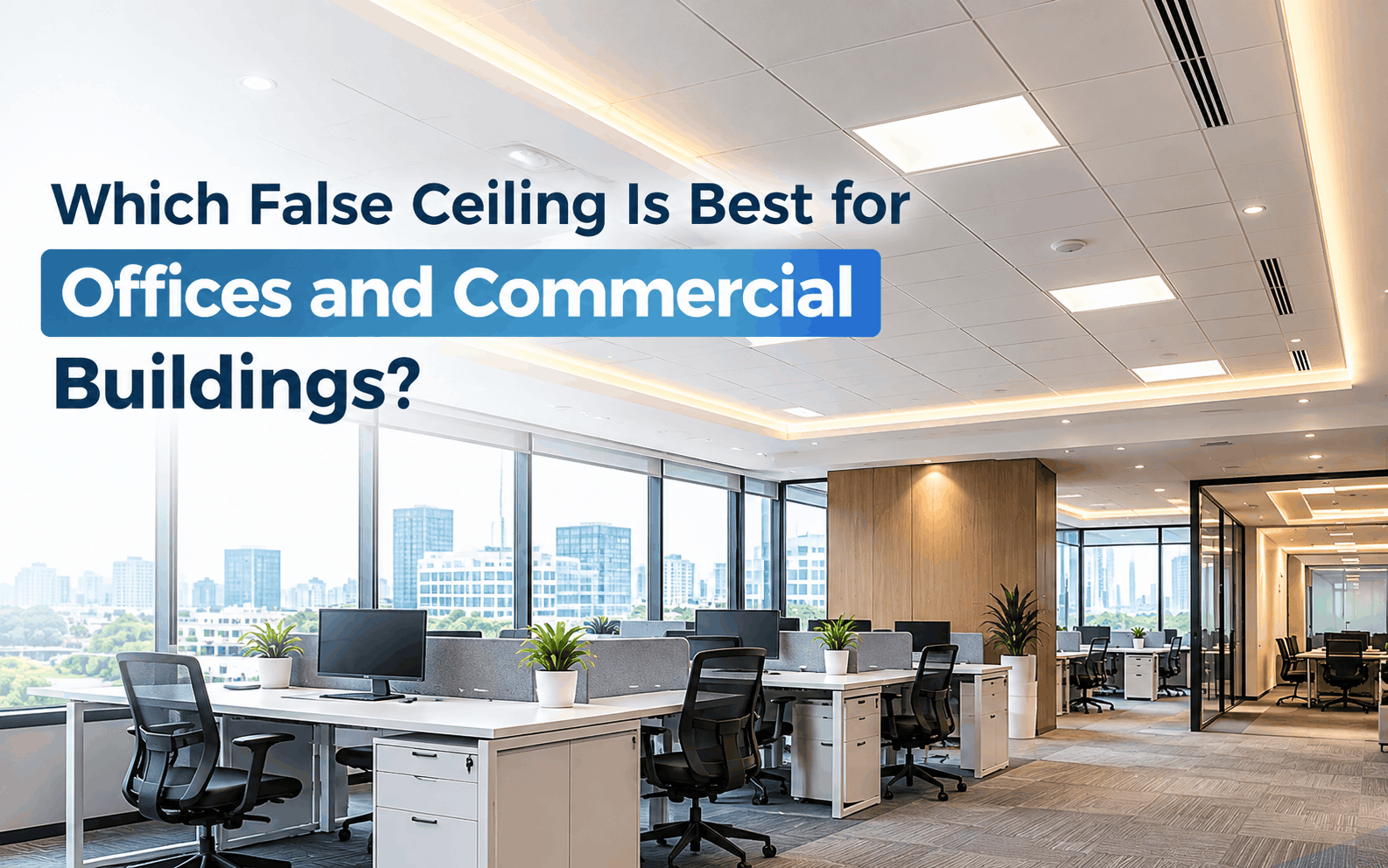
Best False Ceiling for Offices & Commercial Buildings
Choosing the right false ceiling for an office or commercial building is important for creating a comfortable, professional, and attractive workspace. A well-designed ceiling can improve lighting, help manage noise, conceal electrical wiring, and give the entire interior a clean and modern appearance.
However, different commercial spaces have different requirements. An office may need better sound absorption, while a retail showroom may require attractive lighting and a stylish ceiling design. Therefore, selecting the right false ceiling material depends on the purpose of the space, budget, maintenance requirements, and overall interior design.
In this blog, we will explore the best false ceiling options for offices and commercial buildings and help you understand which one is suitable for your needs.
Why Is a False Ceiling Important for Commercial Spaces?
False ceilings are widely used in offices, shops, hospitals, educational institutions, and other commercial buildings. Apart from improving the appearance of the interior, they offer several practical benefits.
1. Better Lighting Arrangement
A false ceiling makes it easier to install LED panel lights, recessed lights, and other lighting fixtures. Proper lighting can create a comfortable working environment and improve the overall appearance of the space.
2. Conceals Electrical Wiring and Services
Commercial buildings often have electrical cables, air-conditioning ducts, and other building services running across the ceiling. A false ceiling helps conceal these elements and creates a neat, organised appearance while allowing suitable access for maintenance.
3. Improved Acoustic Comfort
Offices and commercial spaces can become noisy, especially when many people work in the same area. Choosing suitable acoustic ceiling tiles or sound-absorbing materials can help reduce unwanted noise and improve speech clarity.
4. Professional Interior Appearance
A well-planned false ceiling adds a modern and professional look to offices, conference rooms, reception areas, and commercial interiors.
Types of False Ceilings for Offices and Commercial Buildings
Different false ceiling materials are suitable for different commercial requirements. Here are some popular options to consider.
1. Armstrong False Ceiling
Armstrong ceiling systems, including suitable mineral fibre and other commercial ceiling tiles, are popular choices for offices and institutional buildings. Their suitability depends on the selected tile and suspension system.
Key benefits:
-
Available in different tile designs and finishes.
-
Selected products provide sound absorption.
-
Individual tiles can often be removed for access to concealed services.
-
Suitable for offices, classrooms, hospitals, and commercial interiors when the specified product meets project requirements.
Armstrong false ceilings are particularly useful in offices that require a practical ceiling system with convenient maintenance access.
2. Gypsum False Ceiling
Gypsum false ceilings are a popular option for commercial interiors that need a smooth, seamless, and modern finish. They can be used in reception areas, cabins, meeting rooms, and office corridors.
Key benefits:
-
Provides a clean and elegant appearance.
-
Supports recessed lights and suitable integrated lighting designs.
-
Can be finished with paint in different colours.
-
Allows creative ceiling shapes and contemporary designs.
Gypsum ceilings are a good choice when visual appearance is a major priority. However, access panels should be planned wherever regular maintenance of concealed services is required.
3. Grid False Ceiling
Grid false ceilings use a suspended framework that supports ceiling tiles or panels. They are widely considered for offices and commercial spaces where maintenance access and practical installation are important.
Key benefits:
-
Provides a structured and organised ceiling layout.
-
Allows access to wiring and other concealed services.
-
Makes replacement of compatible ceiling tiles easier.
-
Can accommodate suitable lighting and ventilation components.
Grid ceilings are suitable for workspaces, educational institutions, retail environments, and other commercial buildings, depending on the selected panels and performance requirements.
4. Metal False Ceiling
Metal false ceilings are another option for commercial buildings that need a durable, contemporary finish. Depending on the product, metal panels may be available in different colours, shapes, and perforated designs.
Key benefits:
-
Offers a modern architectural appearance.
-
Can provide good durability when properly specified.
-
Some systems offer convenient access to concealed services.
-
Suitable for selected offices, retail spaces, corridors, and public buildings.
For areas with acoustic requirements, consider perforated metal panels with an appropriate acoustic backing rather than assuming that all metal ceilings absorb sound.
5. PVC False Ceiling
PVC ceiling panels may be considered for selected commercial interiors where lightweight materials and ease of cleaning are priorities.
Key benefits:
-
Lightweight construction.
-
Available in different colours and finishes.
-
Generally easy to clean.
-
May suit certain utility and service areas.
Before choosing PVC, verify its fire performance, suitability for the building type, and compliance with applicable local regulations. It may not be the right choice for every office or large commercial building.
Which False Ceiling Is Best for Different Commercial Spaces?
The ideal ceiling depends on how each area is used.
-
Office workstations: Acoustic ceiling tiles or suitable grid ceiling systems can help manage noise and provide access to building services.
-
Conference rooms: Acoustic ceiling solutions are worth considering to improve speech clarity during meetings.
-
Reception areas: Gypsum ceilings can create an attractive and professional first impression.
-
Retail showrooms: Gypsum or suitable metal ceiling systems can complement the interior design and lighting arrangement.
-
Hospitals and clinics: Select ceiling systems that meet the required hygiene, cleanability, fire safety, and maintenance specifications.
-
Educational institutions: Suitable acoustic tiles and grid ceiling systems may help create more comfortable learning environments.
Always select the ceiling system according to the specific requirements of the building rather than choosing based on appearance alone.
Factors to Consider Before Choosing a Commercial False Ceiling
Before finalising a false ceiling for your office or commercial building, consider the following factors.
1. Budget: Compare the total installed cost, including the ceiling material, framework, labour, lighting provisions, and finishing work.
2. Acoustic Performance: If your office has meeting rooms or open workstations, check the product's acoustic performance instead of relying only on its appearance.
3. Maintenance Access: Choose a system that allows convenient access to wiring, air-conditioning equipment, and other concealed services.
4. Fire Safety: Check the fire classification and relevant test documentation for the complete ceiling system. Requirements may vary depending on the building and its occupancy.
5. Durability and Moisture Resistance: Consider the indoor environment and select materials suitable for the expected moisture levels and maintenance conditions.
6. Lighting and Air Conditioning: Coordinate the ceiling design with lighting fixtures, air-conditioning ducts, sprinklers, and other building services before installation.
How Much Does a Commercial False Ceiling Cost?
The cost of a false ceiling for an office or commercial building depends on several factors, including the material, ceiling height, total area, design complexity, framework, and installation requirements.
Grid ceiling systems may have different pricing from gypsum or metal ceiling systems. Additional work, such as integrated lighting, acoustic treatments, and special finishes, can also affect the final cost.
For an accurate estimate, measure the ceiling area and compare quotations based on the same material specifications, installation scope, and finishing requirements. If your project is in Coimbatore, consulting a local false ceiling contractor can help you understand the options suitable for your building and budget.
Why Choose a Professional False Ceiling Contractor?
Professional planning and installation help ensure that the selected ceiling system meets the project's functional and design requirements.
An experienced contractor can help you choose suitable materials, plan lighting arrangements, coordinate with electrical and air-conditioning services, and achieve a neat finish. Proper installation is also important for ensuring the stability of the ceiling framework and compliance with applicable safety requirements.
For commercial projects, it is particularly important to coordinate the ceiling work with other interior and building services before installation begins.
Conclusion
Choosing the best false ceiling for offices and commercial buildings depends on your budget, interior design, acoustic requirements, maintenance needs, and building specifications.
Armstrong and other suitable grid ceiling systems are worth considering for practical office environments, while gypsum ceilings can be an excellent option for reception areas and modern commercial interiors. Metal and PVC systems may also suit particular applications when their performance and safety requirements are properly evaluated.
Before making a final decision, compare the available materials and consult a professional to identify the most suitable solution for your project.
If you are planning an office or commercial interior project in Coimbatore, explore the false ceiling solutions available at False Ceiling in Coimbatore to find an option that suits your space and requirements.